The Camp Merritt Memorial Names Project
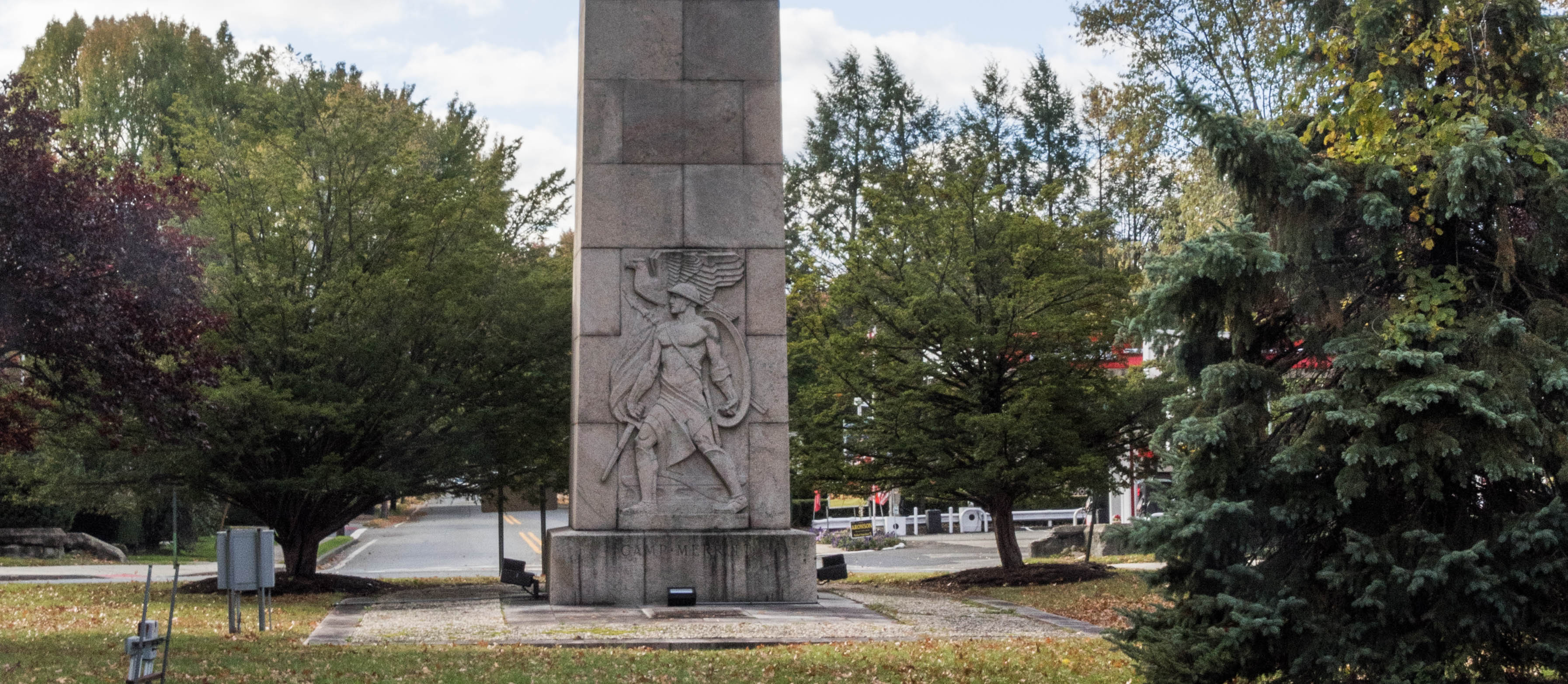
The Memorial
Traveling north on Knickerbocker Road from Tenafly towards Cresskill and Dumont, one cannot miss a striking 65-foot obelisk resembling a miniature Washington Monument amidst the trees. This impressive structure is the Camp Merritt Monument, situated in Bergen County's Northern Valley, New Jersey. However, its significance goes beyond visual appeal, serving as a poignant reminder of the region's drastic transformation over the past century.
In 1917, Bergen County had a modest population of around 170,000 - a fraction of its current size. The neighboring towns of Cresskill and Dumont were home to approximately 800 and 1,500 residents, respectively. Much of the land was comprised of farms, orchards and woodlands.
Upon U.S. entry into World War I, an urgent need arose for a major Army embarkation camp accommodating 45,000 troops. Remarkably, Camp Merritt was constructed in the heart of Bergen County to meet this need. Appreciating the site's historical import requires a deeper look at the memorial itself.
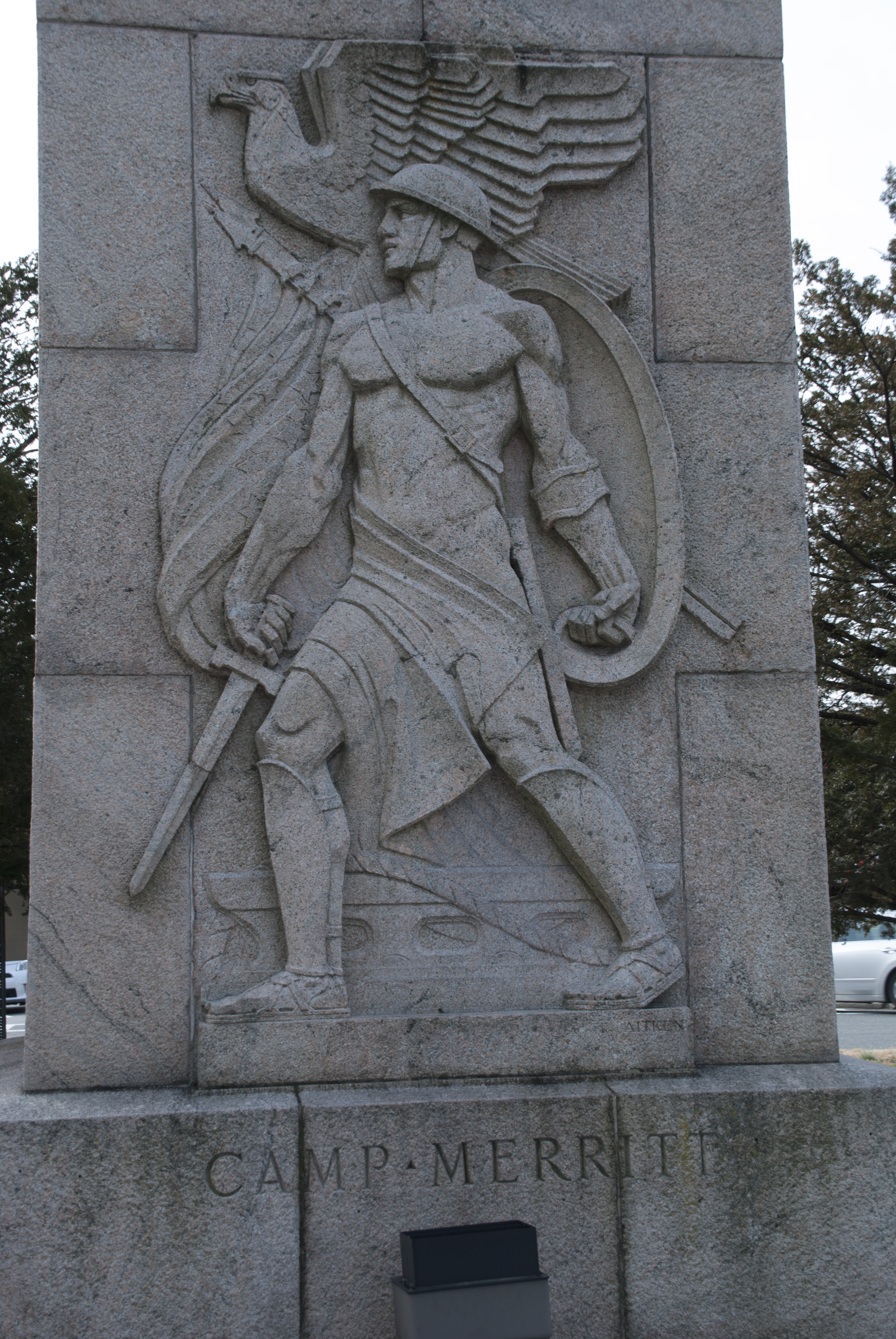
On the monument's northern face is a low-relief sculpture by Captain Robert Aitken depicting a World War I doughboy reminiscent of a Greek warrior with an eagle upon his back.
Camp Merritt played a vital role deploying American forces to Europe, with over 578,000 troops passing through - one of every five soldiers bound for France. It stood as the nation’s busiest embarkation hub. Following the November 11, 1918 armistice, over 509,000 returning soldiers were welcomed at Camp Merritt before continuing their journeys home by train. In just two years, over one million troops passed through.
Most transient soldiers spent three to five days engaged in rigorous drills while undergoing medical exams and equipment checks before departure.
Troops embarked for Europe from Hoboken's Alpine Landing, commencing midnight marches from Camp Merritt. The lengthy trek proceeded down to Cresskill, up Hillside Avenue cresting the Palisades, then descending the cliffs to the Landing. These remarkable late night processions drew crowds of well-wishers cheering the departing along the route. Children even assisted by gathering soldiers’ letters for delivery to the local post office.
The Map and The Camp
On the ground in front of the North side of the memorial is a map showing the camp and its buildings. North is on the right side of the map. The green dot is the site of the current memorial. Running north to south is Knickerbocker Road; running east to west is Madison Ave.
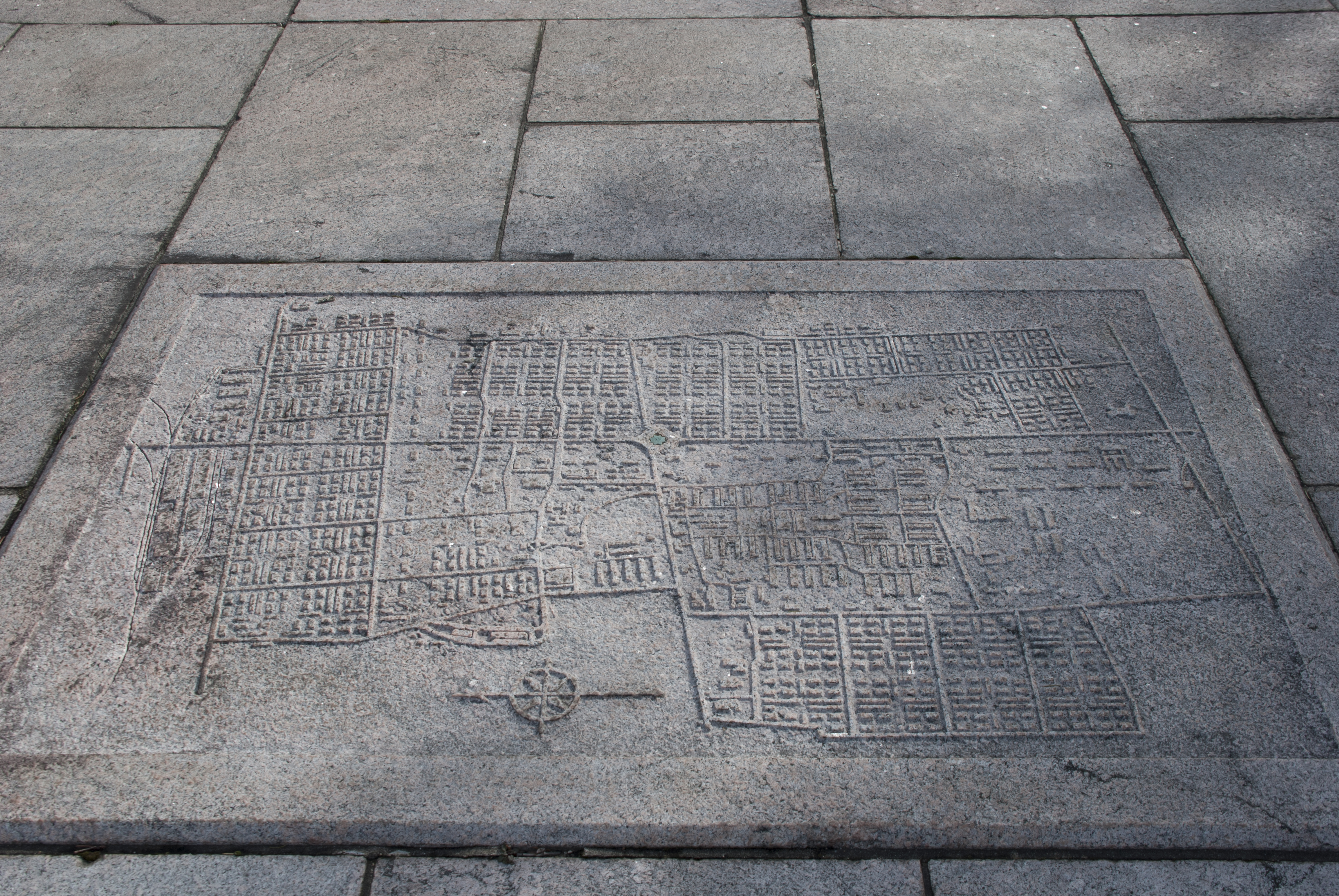
Upon the United States' entry into World War I, the Army needed a series of embarkation camps near railroads and near the departure port of Hoboken, New Jersey as a final stop for soldiers before being shipped off to Europe to "fight the Kaiser". The Camp Merritt location was ideal. The area was a flat plain about 10 miles from New York City. Descending off the plain to the East, one would find the Erie (Northern) Railroad in Cresskill. Going West led to the West Shore Railroad in Dumont. And just over the Hudson River Palisades was the ferry pier at Alpine Landing.
So troops would be trained at Army bases around the country and then transported by railroad to Camp Merritt for final preparation before embarking for Europe.
Transforming these open fields into a full embarkation camp was an immense undertaking. Tracts of land, houses and barns were leased around the camp area. Homes on Dumont's Osborne Hill were reserved for officers' quarters. A special track siding was built off the West Shore line to deliver materials. Rail line was often laid through back yards or front yards. In some cases, whole houses were moved to make way for the tracks.
Construction began in September 1917 and proceeded rapidly, with roads constantly filled with deliveries. Skilled workers earned top wages from contractors. The finished camp covered 580 acres north of Tenafly, encompassing areas of Tenafly, Bergenfield, Cresskill, and Dumont. Another 190 acres housed warehouses, sidings, and gardens. The massive camp held 1200 buildings including 611 two-story barracks, each housing 60 soldiers. Other structures included a 2,500 bed hospital, 143 miles of concrete roads and a service center donated by General Merritt's widow. 500 officers and 7,000 enlisted men were permanently stationed there. Later expansions brought capacity to 45,000 transient troops. On its largest single day of departures, over 15,000 soldiers shipped out from Alpine Landing. The camp drew water through 19 miles of pipe from the Hackensack Water Company. With so many personnel, the camp had 164 kitchens operating and a 24-seat barbershop.
The well-designed camp was nicknamed "The Camp Beautiful." Coming from barren training bases with raw wooden structures, the troops appreciated Camp Merritt's many old spared trees and even some remaining orchards. Remarkably, the camp quartermaster obtained funds to paint the exteriors, further enhancing the environment. One can imagine the pleasant surprise of the arriving troops.
The camp was also considered "glamorous" due to its proximity to the burgeoning film industry. The cliffs of Fort Lee, just across the Hudson, were a popular filming location for silent movies. For those fortunate enough to receive 24-hour passes before shipping out, the camp’s nearness to the 125th Street Ferry and New York City added to the excitement. Even hospital nurses would make recreational trips to Coney Island.
The End
Embarkation camps are built quickly, used as needed, and then put out of service just as quickly.
Houses and land was returned to the original owners.
Some buildings were torn down for lumber, while others were moved and repurposed as houses.
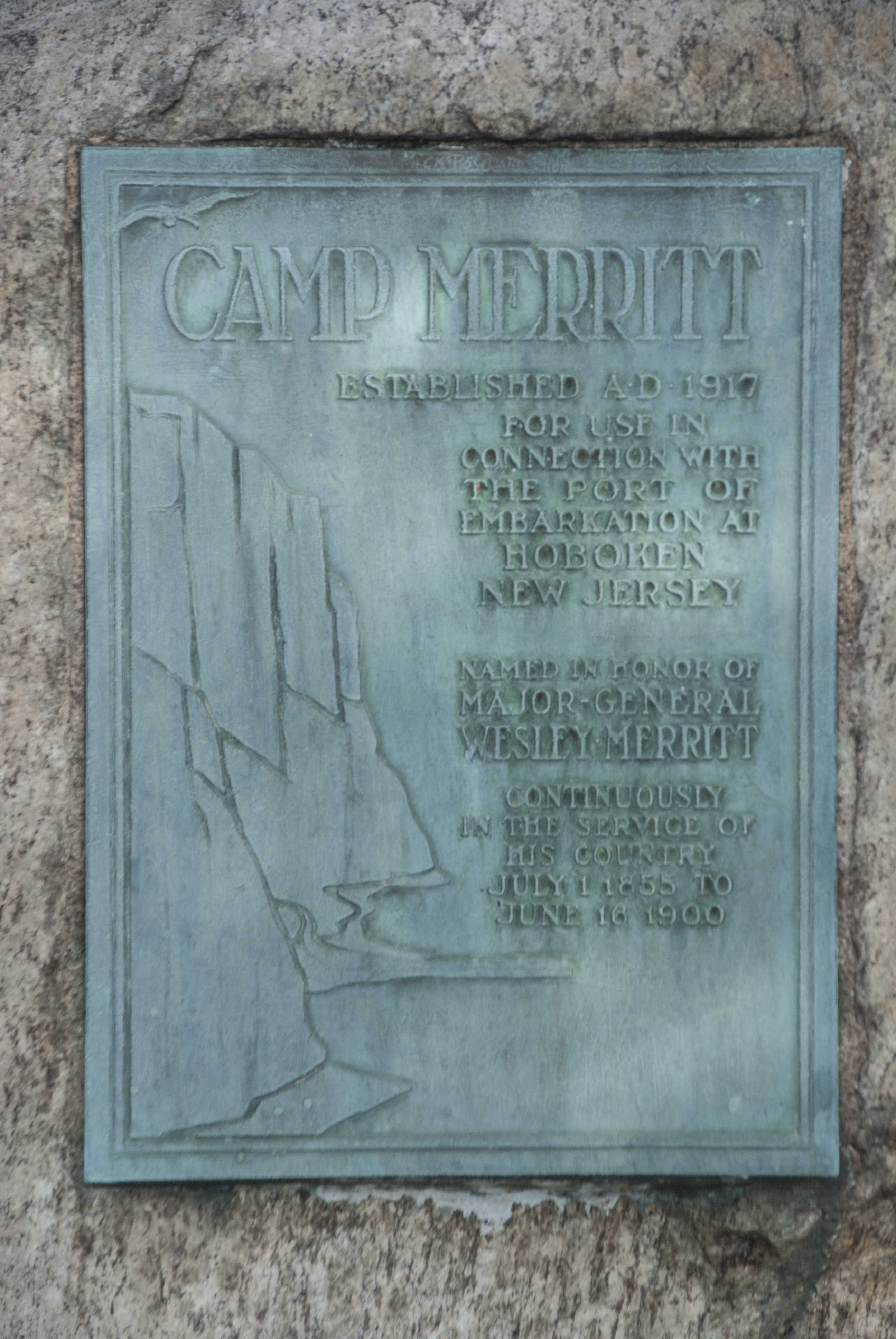 What ever was left was put up for auction. No longer needed, the camp, which has cost the government over $10 million to build, was sold in January 1920 to Harris Brothers Salvaging Company of Chicago for $554,000.
The Dedication
On the South face of the Memorial is the inscription: "In memory of those who gave their lives for their country while on duty in Camp Merritt. This monument marks the center of the camp and faces the highway over which more than a million American soldiers passed on their way to and from World War I, 1917-1919. Erected by the State of New Jersey, the County of Bergen, the Bergen County Historical Society, officers and men of Camp Merritt, many patriotic citizens and the Camp Merritt Memorial Association."
The monument was dedicated on Memorial Day 1924. Over 10,000 attended the dedication. That included General John J. Pershing, Commander of the American Expeditionary Forces, and the widow of Major General Wesley Merritt, for whom the Camp was named.
The Names in the Stone
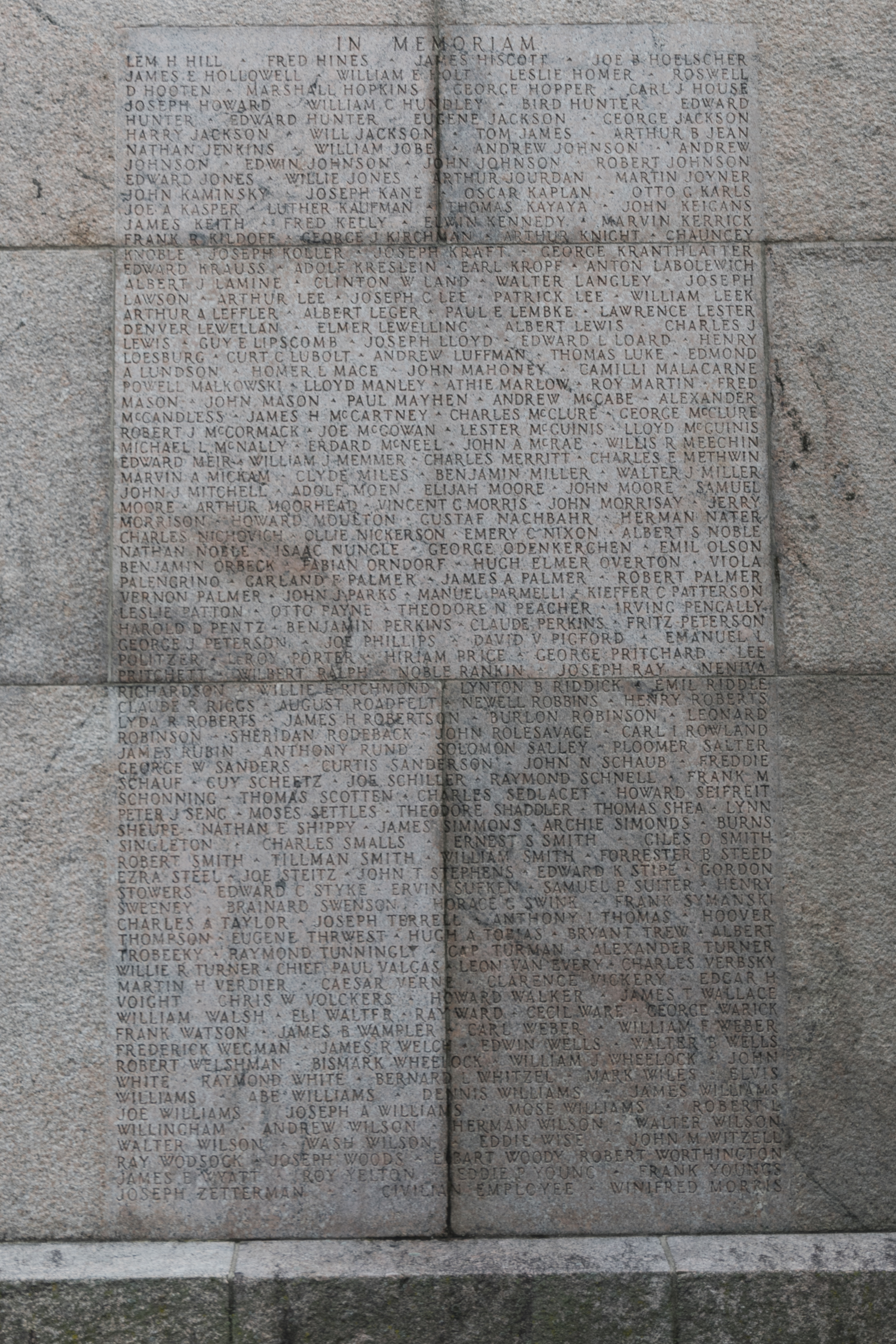
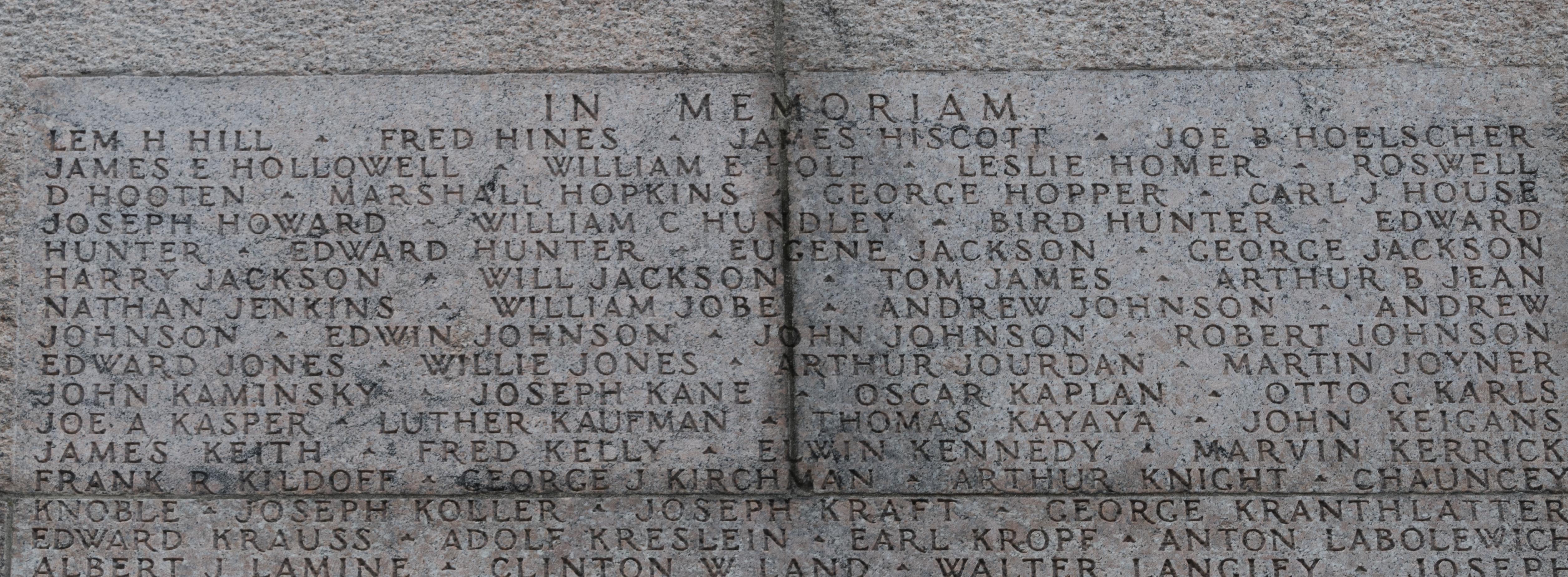
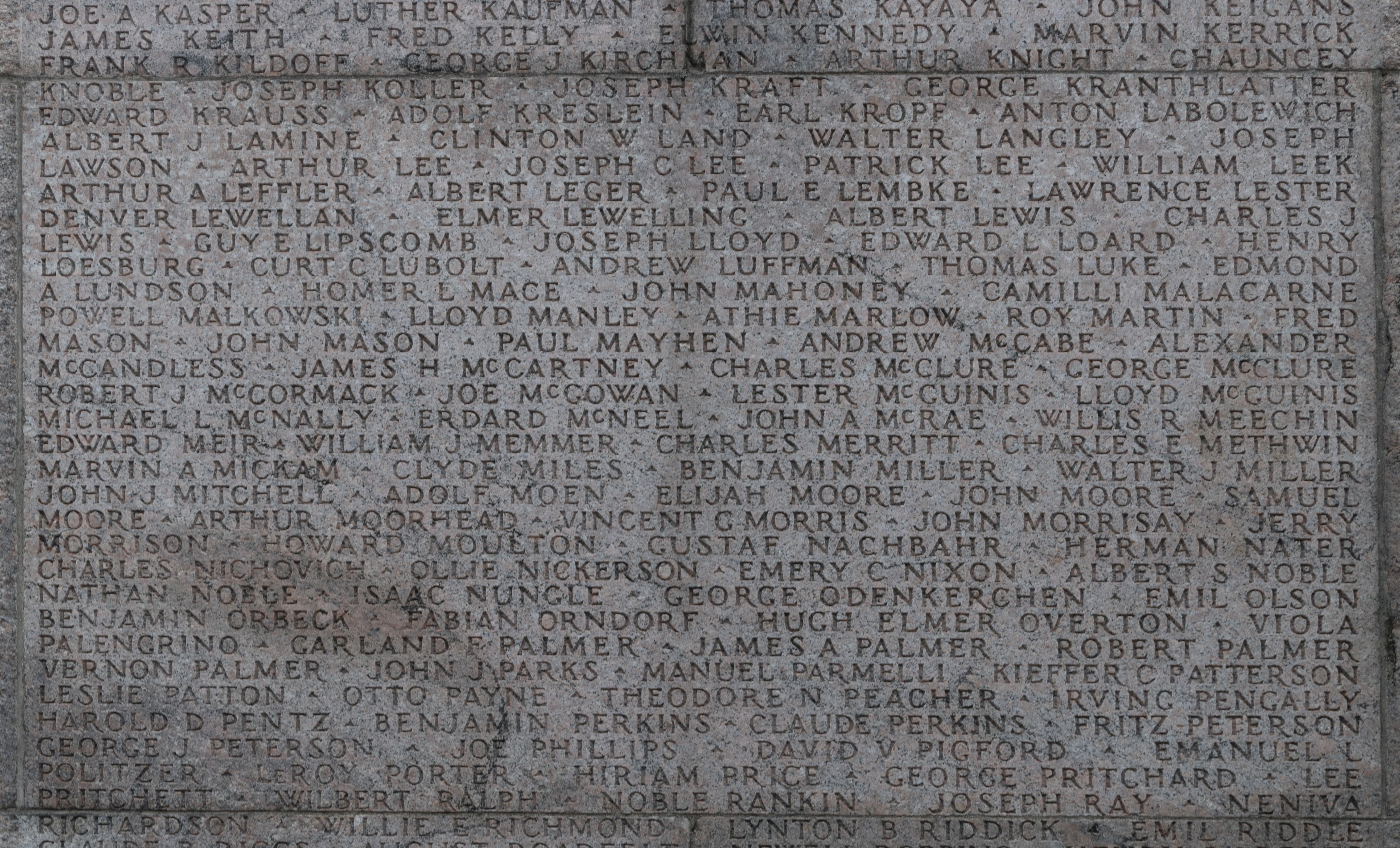
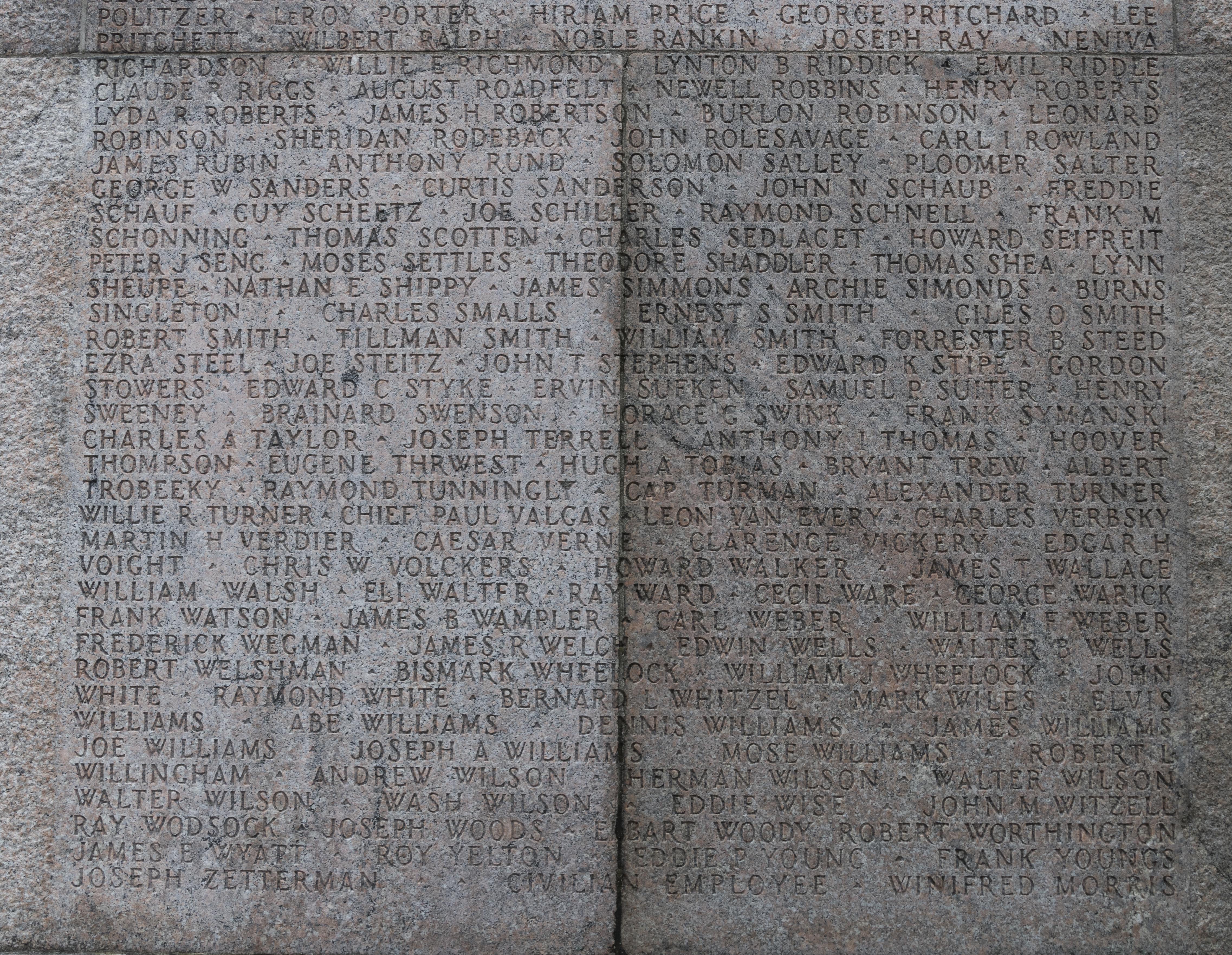
And then there are the names. On both the east- and west-facing sides of the memorial are a total of 579 names. Many died while preparing to go overseas. These included officers and enlisted men, doctors and nurses, and even a civilian employee. Of those listed, 467 died from the flu. 1918 saw one of the most dangerous viral epidemic. While World War I killed over 16 million people, the 1918 Influenza epidemic killed over 50 million people worldwide. Some people died within hours of displaying their first symptoms. The crowded conditions and transient nature of the camp's population made it an ideal location for the epidemic to spread. The camp self-quarantined itself and a half mile radius beyond in an effort to contain the disease.
Finding a Name
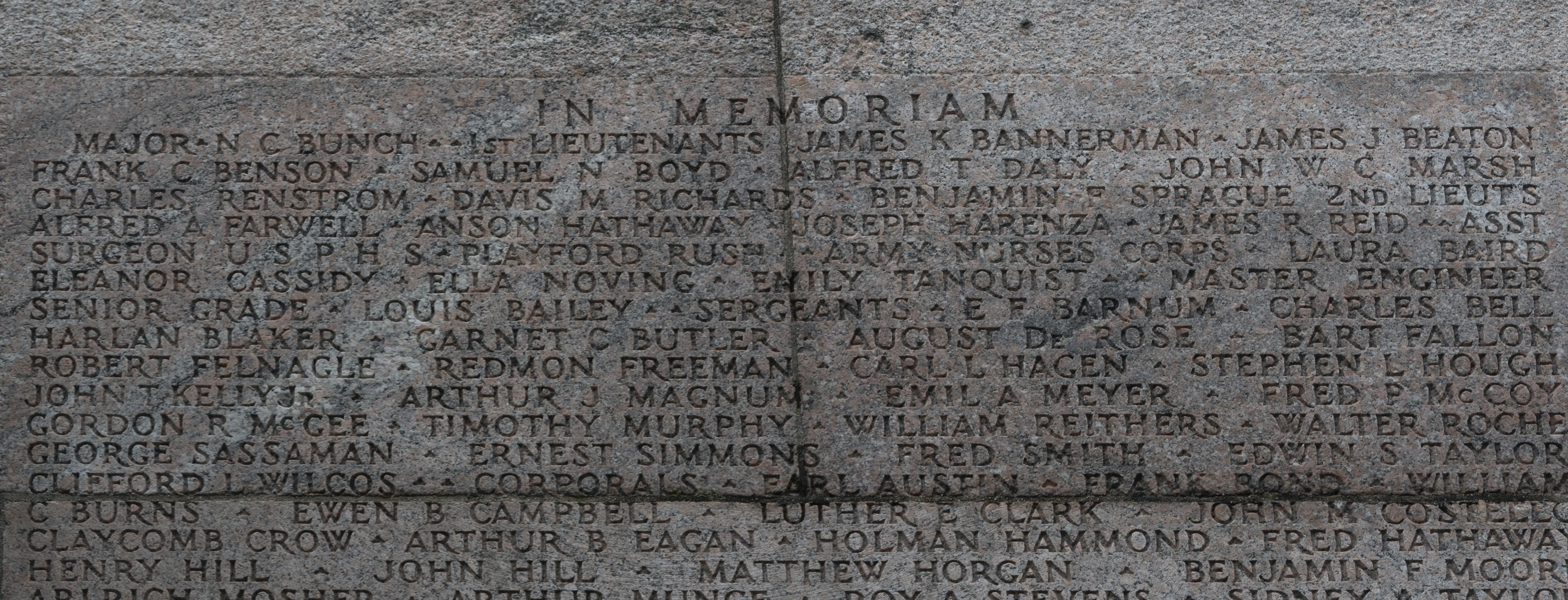
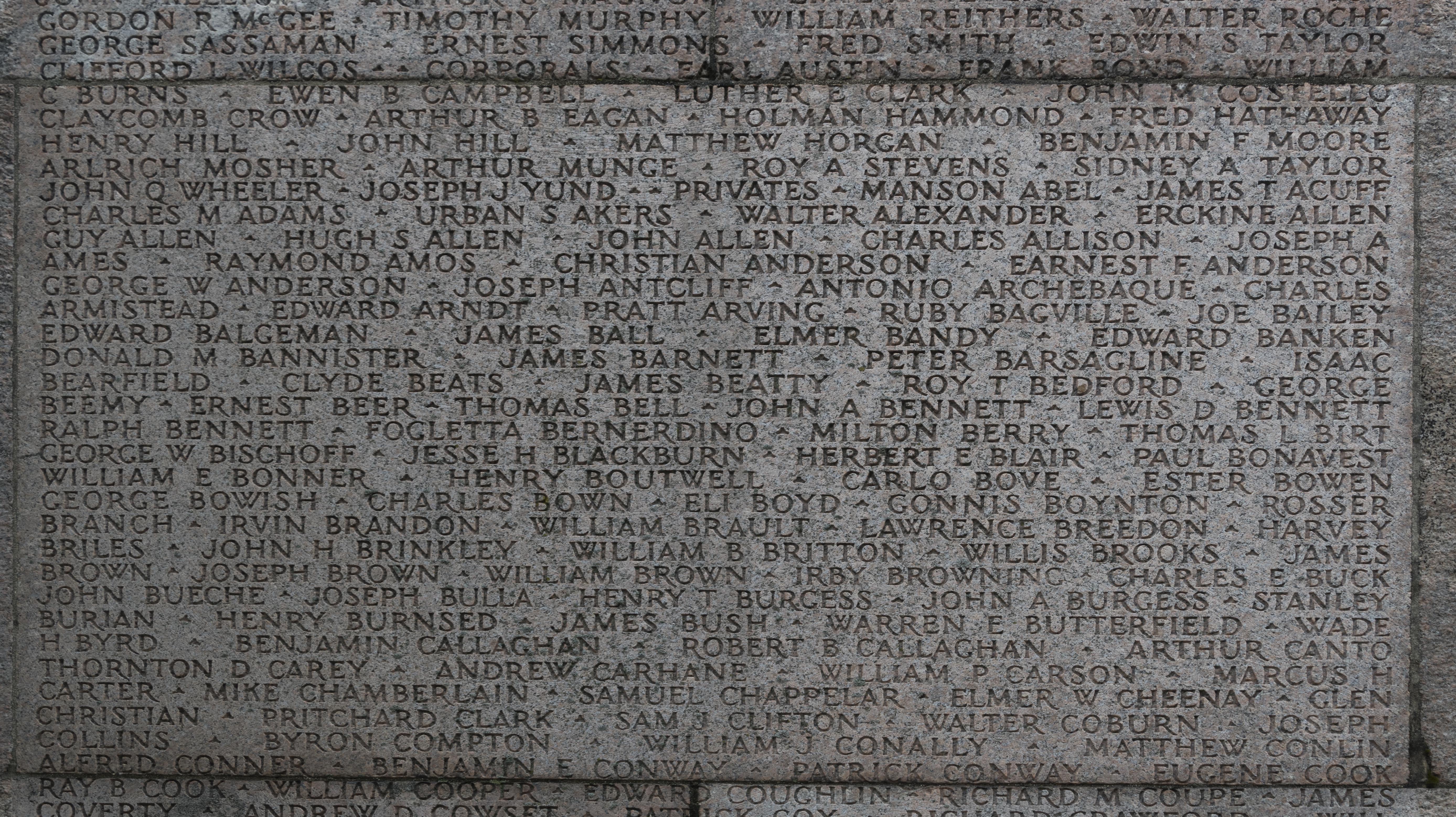
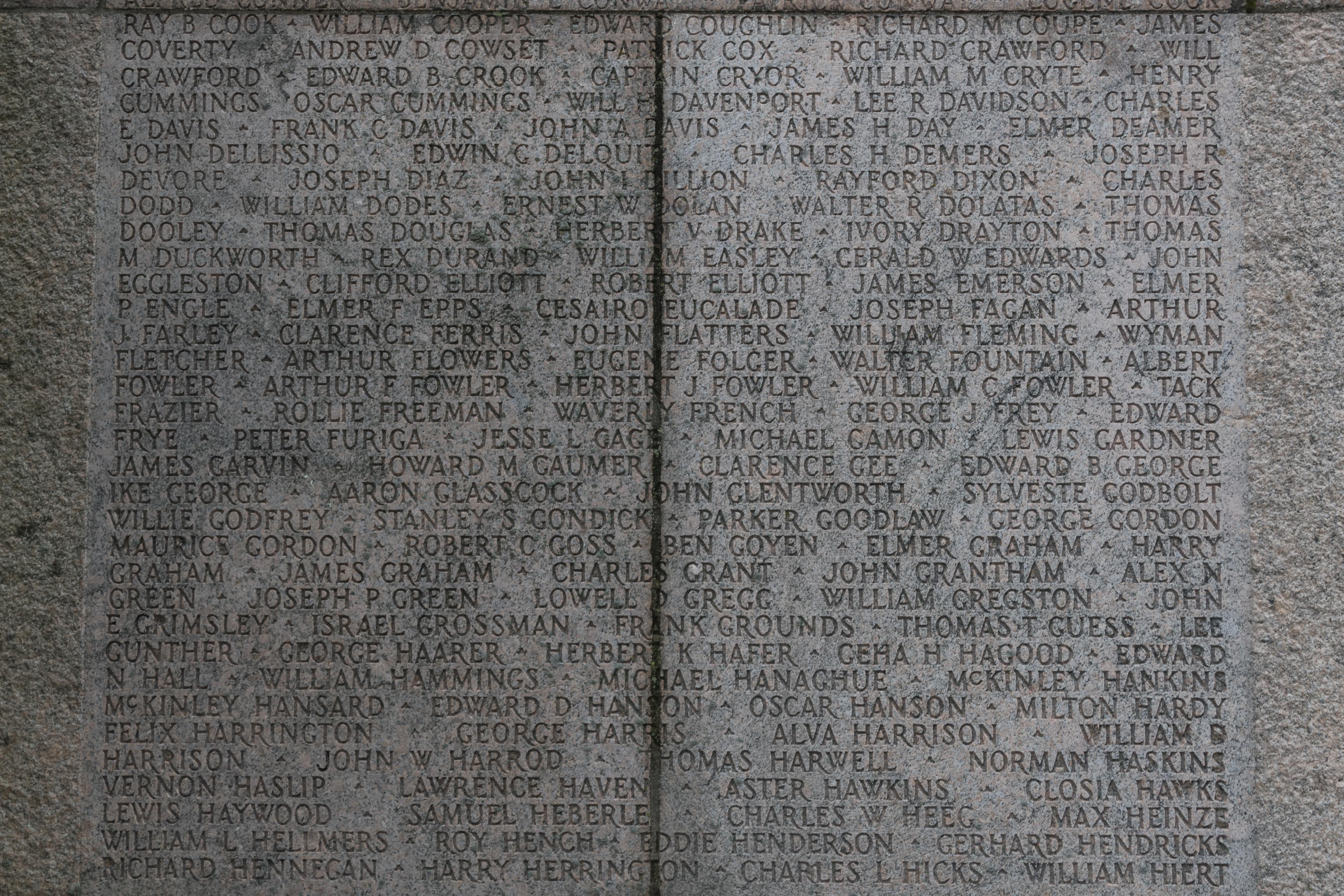
The stones themselves make natural breaks for identifying locations for the names. Thus, I have decided to refer to these areas as E1, E2, and E3 from top to bottom on the east side and W1, W2, and W3 on the west side. The number after the area identifier is the count of that name within that area. As an example, E2-025 is the 25th name in the middle area on the east side.
The list of names begins on the east side and lists the officers by rank, starting with Major N. C. Bunch (ES-001). After the officers come the nurses, then the sargents, followed by the corporals and then the privates. The last name on the east side is Private William Hiert. The first name on the west side is Private Lem H. Hill. The last name at the bottom of the west side is civilian employee Winifried Morris.
Please note that some of the names in the stone are incorrect. For example, Major N.C. Bunch (name in the stone) is really Major Henry Edgar Bunch. Check the 'aka' column of the Names List PDF for corrected names.
Names on the East Side of the Memorial
Names on the West Side of the Memorial
Key Events in the Life of Wesley Merritt
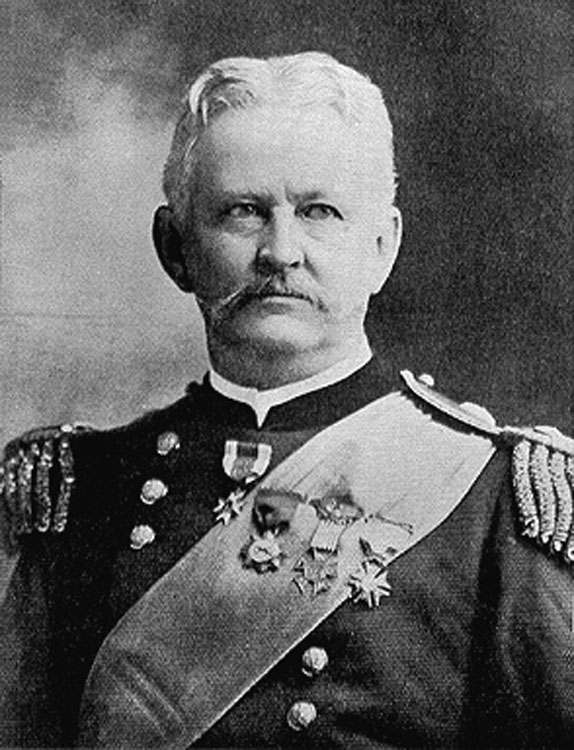 June 16, 1836
- Wesley Merritt is born in New York City.
- Graduates from the United States Military Academy at West Point, and is commissioned as a second lieutenant in the 2nd U.S. Dragoons (later renamed the 2nd Cavalry).
- Appointed captain in the 2nd Cavalry and served as aide-de-camp to Brig. Gen. Philip St. George Cooke
- Served in defenses of Washington, D.C. for remainder of year
- Appointed adjutant for Gen. George Stoneman
- Fought at Battle of Chancellorsville
- Slightly wounded at Battle of Brandy Station
- Promoted to brigadier general of volunteers on June 29
- Commanded Reserve Brigade, 1st Division, Cavalry Corps in Gettysburg Campaign
- Participated in failed assault on Confederate flank on July 3 after Pickett’s Charge
- Took command of 1st Division, Cavalry Corps after death of Gen. John Buford in December
- Led 1st Division, Cavalry Corps in Overland Campaign
- Brevetted to lieutenant colonel for Battle of Yellow Tavern
- Married Caroline Warren Merritt (date unknown)
- Commanded 1st Division, Cavalry Corps, Army of Shenandoah in Valley Campaigns
- Routed Confederates at 3rd Battle of Winchester
- Second-in-command under Sheridan in Appomattox Campaign
- One of commissioners for Confederate surrender at Appomattox Court House
- Brevetted major general in regular army for Battle of Five Forks and Appomattox Campaign
- Mustered out of volunteer service and returned to regular army rank
- Made lieutenant colonel of newly formed 9th Cavalry
- Sent to command Fort Davis, Texas garrison
- Made colonel of 5th Cavalry regiment
- Member of inquiry into Battle of Little Bighorn disaster
- Superintendent of West Point
- Appointed brigadier general in Regular Army
- Caroline Warren Merritt died on June 12 at age 44
- Promoted to major general in U.S. Army
- Commanded 8th Army Corps in invasion of Manila
- Became first U.S. military governor of Philippines
- Married Laura Williams Caton on October 24 in London
- Retired from U.S. Army after long and distinguished career
- Died at age 74 in Natural Bridge, Virginia. He is buried at West Point Cemetery